Fano’s Territorial Claims and the Crisis in Western Oromia
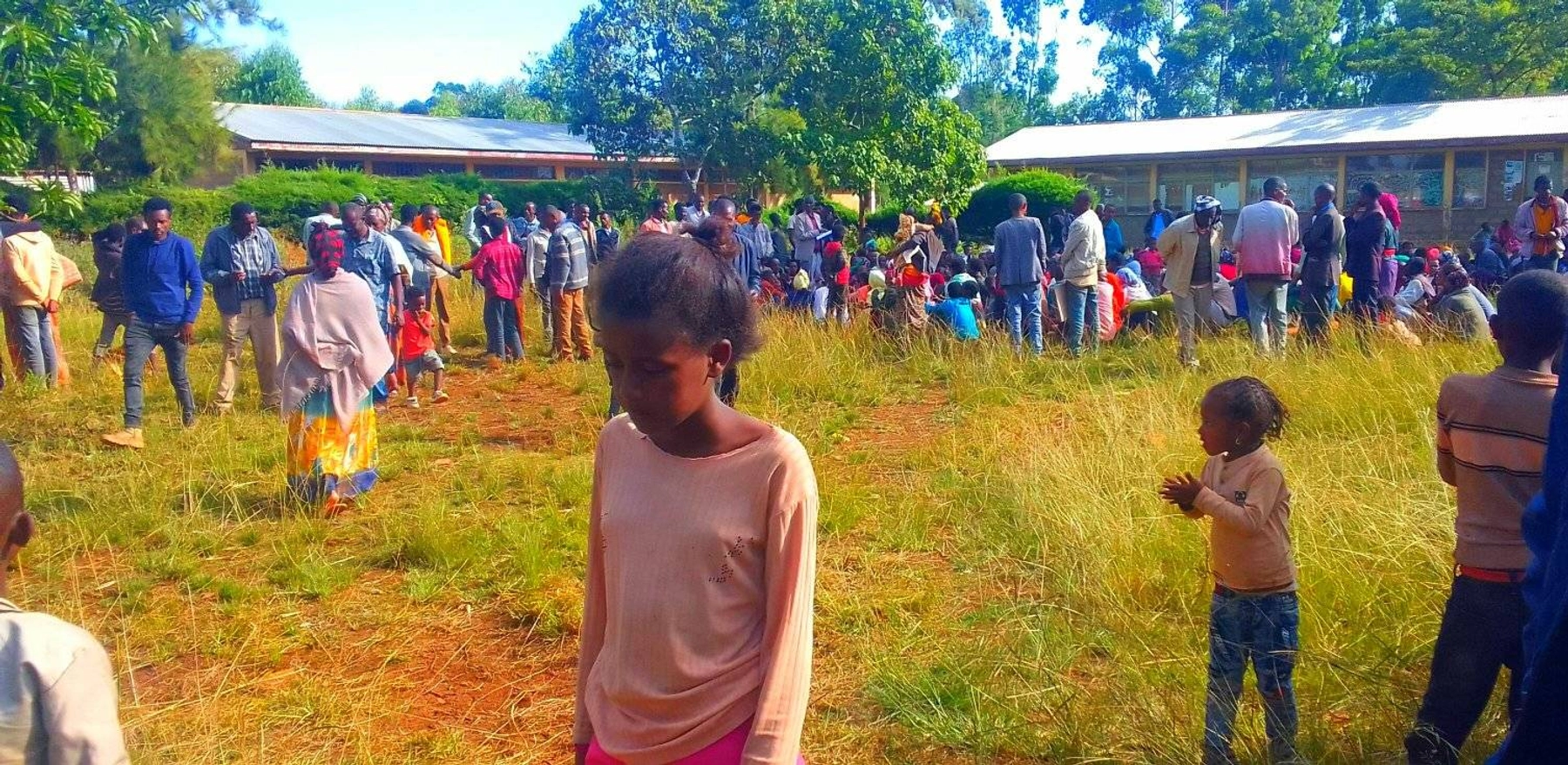
Oromo civilians displaced from Kiramu district following attacks by Amhara militias sheltering temporarily in Gida Ayana district. Source: Gida Ayana District Government Communication Office.
Over the past seven years, violence in the East and Horo Guduru Wallaga zones of Oromia Regional State has ravaged civilian lives, destabilized socioeconomic conditions, and left the area among the country’s deathscapes. Schools have been deserted, farms remain idle or have been taken over by militants, IDPs fleeing their homes have filled nearby towns, transportation services are largely blocked, and health facilities have become nonfunctional.
An Addis Standard report in 2024 found Western Oromia, an area once known for producing some of Ethiopia’s most educated elites, now has dropout rates among the highest in the country, with some of its schools repurposed as military camps. Between 2022 and 2023 alone, more than half a million people were internally displaced in the two zones..
At the core of these crises lie violence by Amhara expansionist militias collectively called Fano and the regime’s counterinsurgency operations against the Oromo Liberation Army (OLA). While the regime’s role in fueling this conflict as well as its lack of urgency in protecting civilians deserves due attention, reducing the conflict in these two zones to a political strategy orchestrated by the regime alone is overly simplistic. This essay thus provides the historical context that turned the lowland areas of the East and Horro Guduru Wallaga zones into an agricultural frontier and examines the eventual emergence of Amhara expansionist ambitions in Wallaga. Furthermore, it analyzes how the regime’s complicity in the conflict intersects with labor patronage. Finally, I will explain how the regime’s counterinsurgency operations against the OLA and the categorization of these zones as “enemy territories” render its people expendable.
Angar-Abay Valleys: From Resettlement to Agriculture Frontier
Despite the predominant assumption that the regime or individual political entrepreneurs orchestrate the conflict, Fano attacks are part of a broader political project to establish the Amhara Special Zone in Oromia, at a minimum, or to integrate the areas into the Amhara region, at a maximum. These territorial claims are embedded in the history of resettlement and the transformation of the Angar-Abay Valleys into profitable agricultural areas during the Derg regime, which launched a massive resettlement program that relocated more than 250,000 people from drought-affected Amhara and Tigray provinces to Wallaga.
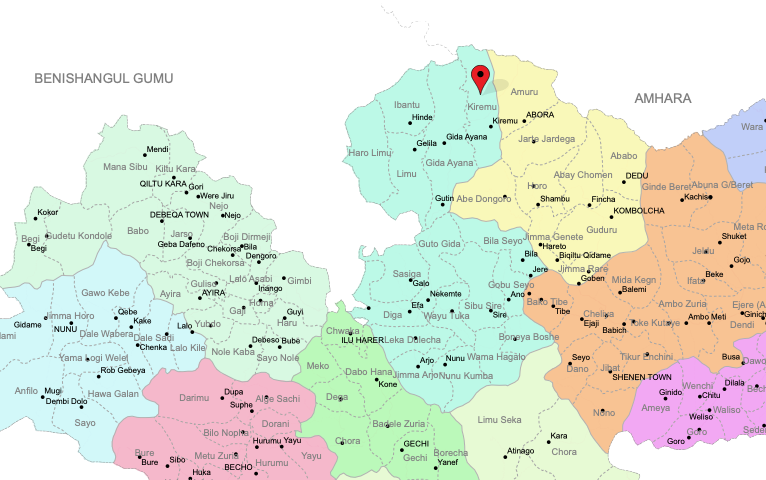
The Derg portrayed the resettlement sites as “uninhabited wasteland,” “empty and virgin territory,” and “bountiful refuge,” invoking a colonial depiction of Indigenous lands as terra nullius and inflicting symbolic violence on Oromo communities from the outset. In the decades that followed, the resettlement program and the Angar Valley state farms brought a massive influx of migrants. As their numbers grew, settlers and migrants began making territorial and political claims to establish the Amhara Special Zone in Oromia in the early 2000s. They did so in coordination with Amhara political parties, including the former All-Amhara People’s Organization (AAPO). Violence erupted in late 2000 and early 2001, displacing more than 10,000 people, resulting in the looting of more than 3,000 livestock and the destruction of about 500 homes belonging to Oromo residents of the then-Gidda Kiremu district. Because the territorial claim was not only locally initiated but also linked to Amhara nationalism, settlers armed themselves clandestinely, as the regime continued to disarm Oromo farmers, to the point of declaring traditional weapons such as spears illegal.
Furthermore, since 2018, the scale, pattern, and approach of the violence have shifted from sporadic intergroup conflict to massacres and mass displacement carried out through well-organized, trained, and coordinated military operations. Since 2022, multiple attacks by the Fano forces in these zones have displaced over half a million people, brutally killed thousands of people, burned houses and properties to ashes, and looted and driven thousands of livestock to Gojjam.
According to my sources in the Kiremu, Agamsa, and Amuru districts, local regime authorities and the federal army would turn away residents seeking protection, saying, “Go and ask the Shanee [OLA] for help.” One might wonder why a regime that fights the Fano in the Amhara region becomes reluctant to fight it in Wallaga, or at least to protect civilians. In fact, as I will elaborate below, the regime uses this group for two purposes: as a proxy and shield in its fight against the OLA and as part of its necropolitical strategy of exposing the people to horrendous violence to punish them.
Collective Punishment as Counterinsurgency Tactic
As a counterinsurgency tactic, the regime used a scorched-earth policy, including indiscriminate drone attacks on civilian infrastructure, closure of public services such as transportation and health facilities, and restrictions on access to production resources, including fertilizers. These actions were intended to punish the population in the “enemy territories” for allegedly sheltering the OLA. A statement by one of the regime’s top officials clearly illustrates the regime’s tactics of collective punishment. Fekadu Tesema, a senior official in Abiy’s regime, explicitly outlined the regime’s civilian “drainage” strategy before the legislative council of the Oromia regional state as follows:
Some of you [parliamentarians] asked whether, since we were able to defeat the Junta [TPLF] in 15 days, we are unable to defeat OLF Shane [Oromo Liberation Army]. You asked whether it was a shortage of troops or something else. Conventional war and guerrilla warfare are different. In conventional warfare, you deploy heavy weaponry and entire brigades. You engage the enemy face-to-face. That was what happened in the North [the war in Tigray]. It was an army against another army. Guerrilla warfare is different. It relies on society for logistics. During the day, they look like civilians and spend time among them. They attend regime-organized meetings, gather information, identify who speaks, and, at night, take harsh actions. This kind of warfare is very complex. The only way to end it is to approach it like a fish. You can’t catch all the fish in the Atlantic or Pacific Oceans. To eliminate them, you would need to dry out the oceans.
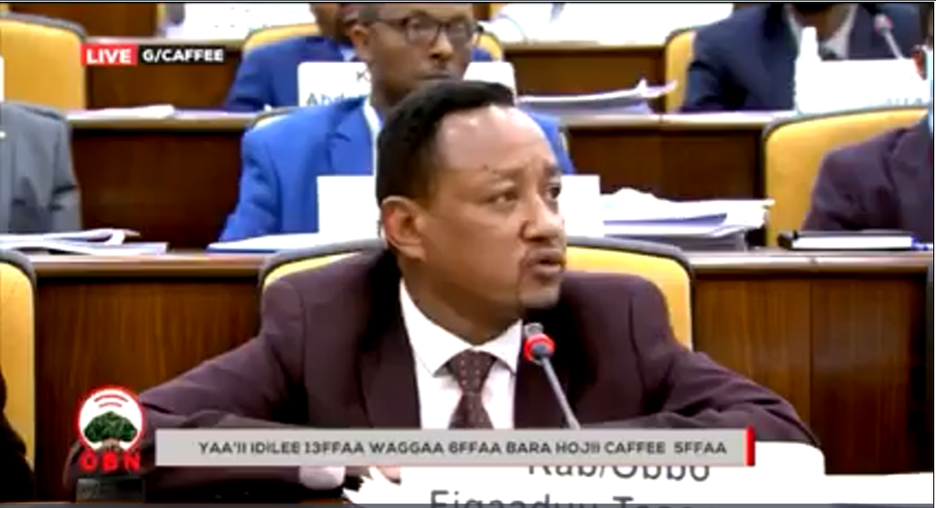
Fekadu Tesema’s explicit framing of the civilian population as a vast “ocean,” rather than a body to protect, reflects the scorched-earth strategies enacted in Wallaga since the command post’s establishment. It also signifies the regime’s withdrawal of protection, a key state responsibility, and, conversely, exposes civilians in these areas to the brutality of the Amhara armed forces. Here, it is necessary to argue that Fano’s violence complements the regime’s broader strategy of “draining the ocean to kill the fish,” a counterinsurgency tactic of targeting civilians that it accuses of sheltering the OLA. It is imperative to clarify the relationship between the government and Fano in Wallaga. It is clear that the Fano-government pact shifted into conflict and full-fledged war following the Pretoria Agreement between Tigray forces and the federal government. Nevertheless, that hostility did not translate into open confrontation in their encounters in Wallaga. As sources inside the regime also reveal, the regime in Finfinne does not consider the Fano in Wallaga an immediate threat but rather a tactical ally in weakening the people it considers defiant in accepting Abiy Ahmed’s vision of Ethiopian nationalism.
Political Patronage and Economic Interdependence – the role of regime officials in the conflict
The political economy dimension of the conflict should also be clarified here. Over the past two decades, the lowlands stretching from the Angar toward the Abay Valley have increasingly become sites of commercial agriculture, particularly for maize and sesame. Oromo and Amhara investors, including those holding higher regime offices at the district and zone levels in these two zones, have accumulated large tracts of land; these commercial farms have relied heavily on migrant and settler labor. In this context, where land, labor, and ethnicity are intertwined, economic interdependence has made political patronage and selective protection key dynamics in the conflict. As a result, regime authorities in Oromia (mostly at the zone and district levels) have often been reluctant to report the violence and to collaborate with regime security personnel to intervene. For these political-economic entrepreneurs, the viability and profitability of their commercial agriculture are believed to depend on a sustained labor supply, which, by implication, means the consolidation of Amhara settler-cum-Fano power in these valleys. What these investors and regime officials failed to foresee is that settlers’ claims for self-rule and Fano’s aggression in effecting these claims would lead to the dispossession of the land these rentier officials currently occupy.
To sum up, Wallaga has become a space of contestation over the political and economic interests of multilayered actors, where historical dynamics of resettlement and the expansion of commercial agriculture intersect with ethnically-based territorial claims. The Fano operating in Wallaga is not localized armed banditry, as some argue, but part of the broader Amhara Fano National Movement operating in the Amhara region, with the goal of territorial control and the annexation of Wallaga. While the presence of the OLA in the region gives the regime a pretext for collective punishment and the restriction of social services, extortion by the pseudo-OLA factions has made life unbearable for ordinary citizens. The complicity of Oromo political groups and economic entrepreneurs in supporting Fano adds another layer of complexity to the conflict. While the OLA’s direct participation in the conflict is still obscure, many ask why it is not defending the people it claims to fight for, while others suspect that it might be operating in tandem with the Fano itself. If this speculation is true, I would like to reiterate what I have argued elsewhere that, in the spectrum of alliance formation, a meaningful coalition can only be established between those who share similar historical memories of marginalization and struggle for their right to self-determination, rather than with those with imperial ambitions.
In all these conflict theaters, it’s sadly civilians who bear the brunt of the suffering. Life in the two Wallaga zones has become unbearable due to deteriorating security, the collapse of farming and commerce, and the breakdown of essential institutions, including healthcare facilities and schools. The vast majority of the youth have fled to nearby towns and cities.
Ultimately, the authorities in Finfinne must recognize that their use of collective punishment and proxy warfare cannot produce sustainable peace. It is also critical that all Fano factions cease their campaign of targeting innocent civilians and territorial claims in Wallaga, as these actions do nothing but undermine the prospects of peaceful Amhara-Oromo relations in Oromia.
We need your support
We trust you found something of value in this article. If so, we kindly ask you to consider helping Curate Oromia continue its work.
If you believe in the importance of independent voices and honest reporting, we invite you to support our efforts through our GoFundMe campaign.
Every contribution, however small, goes directly to our writers and the expansion of our reach.
Thank you for your support.