Ethiopia’s “National Dialogue” Risks Repeating Somalia’s Tragedy
For three decades, Ethiopia’s fragile union rested on the constitutional guarantee of state and communal land ownership, which protected agrarian populations from displacement, and a system of multinational federalism that guaranteed regional self-determination. Together, these two constitutional arrangements functioned as ‘insurance policies’ against the Ethiopian state’s enduring centralizing tendencies, even if only paper.
Recently, however, these insurance policies have been presented as negotiable ‘agendas’ in the upcoming national dialogue. Whether these are genuine negotiations, or simply a mechanism for the ruling party to dismantle both systems and enforce a new reality by decree, is another story altogether.
Recent leaks from a closed-door Prosperity Party (PP) council meeting in Adama, Oromia’s second largest city, reveals controversial agendas aimed at rewriting Ethiopia’s constitution. The proposals are sweeping with each suggestion eclipsing the other in its potential explosiveness. These include, but are not limited to: stripping the right to self-determination and secession (Article 39), redrawing regional boundaries based on “geography and economy,” abolishing Oromia’s “special interest” in Addis Ababa, and perhaps the most immediate and pressing, removing land ownership protections from the constitution so land can be privately bought, sold, and governed by simple executive proclamations.
These might look like the logical, modernizing reforms of the ruling party trying to steer the country away from ethnic polarization toward a unified “civic” identity, notwithstanding that the attempt to form a unified civic identity is what got us here in the first place.
But why now? Why pursue these reforms when soaring inflation, lawlessness and war are tearing the country apart?
Successive civil wars in Tigray, Amhara, and Oromia have drained Ethiopia’s treasury, leaving the government in Addis Ababa teetering on the brink of sovereign debt default. Not a day passes without news of a creditors meeting and inability reaching final agreements. The lifeline the government desperately needs in the form of multi-billion-dollar bailouts from the IMF, the World Bank, and Western creditors unsurprisingly comes with strict, uncompromising strings attached. To access the cash, the Ethiopian government must liberalize, privatize, and centralize; the go-to recipe for transforming states into market-oriented institutions governed by the priorities of global capital. It is therefore no surprise that Singapore is flaunted as a model, despite its governance structures more closely resembling those of a corporation rather than a state.
By offering up the nations’ land and regional autonomy to satisfy these global balance sheets, the ruling Prosperity Party (PP) is dangerously walking into a classic geopolitical trap. It is a modern, economic rerun of the tragedy that befell Somali President Siad Barre in the late 1970s.
The “Safari Club” and its Promises
In his analysis of late Cold War politics, Mahmood Mamdani details how neighboring Somalia gambled its own domestic stability on the promises of foreign patrons. In 1977, as Siad Barre was considering to pursue his pan-Somali territorial dreams, he found himself desperate for weapons and financial aid. A clandestine alliance of Western-aligned intelligence agencies, known as the “Safari Club,” came knocking with a tempting deal: expel your Soviet advisers, align with the West, and we will supply the cash and arms you need (86).
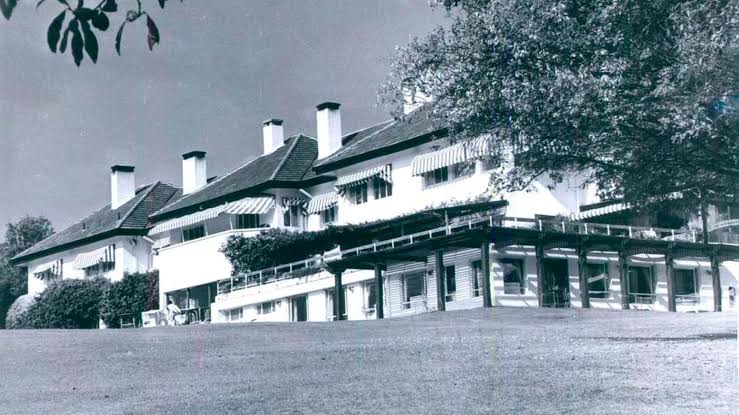
Barre took the bait. He threw away his strategic alliance with the USSR, toned down his socialist rhetoric, and launched a full-scale and costly invasion against neighboring Ethiopia, only to find himself completely abandoned. When the geopolitical winds shifted, Mamdani notes, a backroom deal between Washington and Moscow left Somalia “standing high and dry on the battlefield”(86). The United States flatly refused to deliver the promised backing. Politically and economically bankrupt, Barre realized too late that he had been the naive victim of a superpower deal. Deprived of foreign rescue and having shattered his domestic alliances, his country spiraled into a continuing cycle of collapse and balkanization from which it has yet to recover.
A crucial detail in this story is how Egypt was the central pillar of that very Safari Club, along with France, Iran, Morocco, and Saudi Arabia. When the conflict peaked, Washington made a cold, calculated decision. From the U.S. perspective, Egypt, which had recently started pivoting away from the Soviets under Anwar Sadat, was seen as a more vital, irreplaceable regional anchor to ensure stability. Somalia’s importance did not weigh as much. Despite tacitly allowing his overtures through Western and Middle Eastern allies, President Jimmy Carter reverted to warning that Barre’s local ambitions risked upsetting the global balance of power. The superpowers chose to protect and bankroll Cairo, while Somalia was discarded as collateral damage.
Ethiopia’s ruling Prosperity Party is currently risking a rerun of the same saga with the IMF and other global creditors. Only this time, the illusion of potential foreign support cosplays as neoliberal financial coalitions like the Paris Club, instead of the Cold War intelligence coalition of the Safari Club.
Too Big to Fail, or Too Fragmented to Save?
What is perhaps most ironic is that Ethiopia is not the only country that is currently starved for cash in the region. Its primary geopolitical rival, Egypt, which views Ethiopia’s Grand Ethiopian Renaissance Dam (GERD) as an existential threat, has been undergoing its own severe economic crisis.
Faced with massive debt and foreign exchange shortages, Cairo has similarly swallowed the bitter pills prescribed by international creditors. It has aggressively privatized state assets, floated its currency, and opened its economy to billions of dollars in bailouts from the IMF, Western capitals, and Gulf allies.
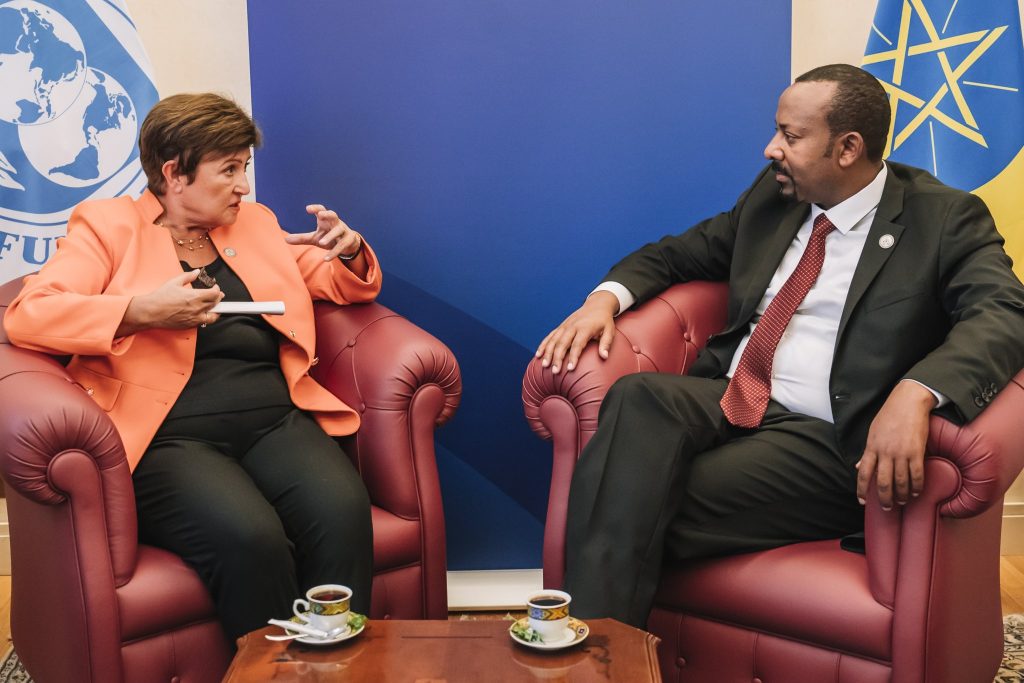
In the eyes of global financial institutions and Western powers, Egypt is considered “too big to fail” because its collapse would destabilize the Suez Canal, the Mediterranean, and the Middle East. If a point of absolute financial friction arrives, and international creditors must choose where to sustain their multi-billion-dollar commitments, Cairo’s strategic weight will almost certainly eclipse Addis Ababa’s, just as it did Somalia in the 70s.
PP are similarly tearing up their own domestic constitutional order in appealing to a global financial syndicate that, when pushed, will always prioritize global maritime security and Mediterranean stability over the survival of a landlocked Ethiopian federation. And make no mistake; regaining access to the Red Sea is not going to change these dynamics for the foreseeable future!
The Local Price of treating Ethiopian Land as Financial Collateral
Nowhere is this peril more immediate than in the proposal touted in the National Dialogue to strip land ownership from the constitution. To the architects of global finance, land is simply a potential source of collateral. Just as military and economic pressure on states like Iran is designed to secure the physical resources that stabilize the U.S. dollar, the quiet structural adjustment of Ethiopia’s economy is aimed at a similar goal of converting unmonetized local assets into global financial backing. In a global financial system desperate for new, real-world collateral to back trillions of circulating dollars, Ethiopian economy and land is a prime target.
But in Ethiopia, land is not just real estate; it is identity, history, and survival shaped by tradition and decades of fighting off oppressive feudal order(s). As the saying goes in Afaan Oromoo “laftii teenya lafee keenya” (our land is our bones.)
Under the current constitution, land is strictly public property. This was the ultimate safeguard erected to prevent poor farmers from being permanently dispossessed. By proposing to move land administration out of the constitution and into easily amendable federal “proclamations,” PP is preparing to bypass regional resistance. The goal is clear: clear the legal hurdles so the state can lease, sell, and collateralize land to raise the foreign capital required to service its debts and please international creditors.
This is a recipe for a historic explosion.
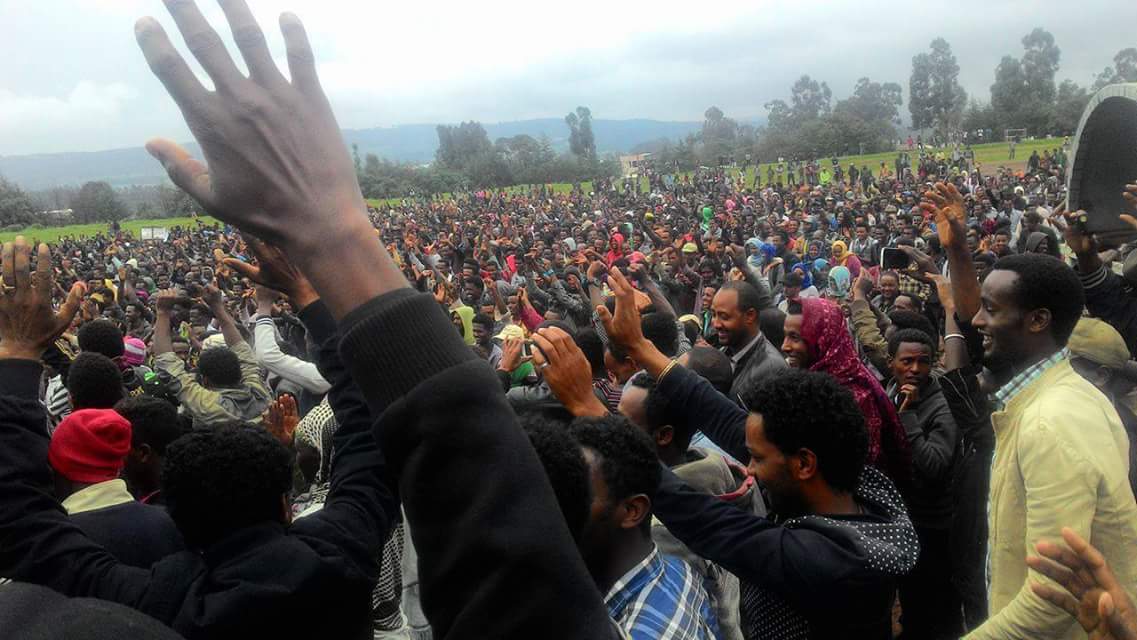
It was precisely the fear of federal land grabs and displacement around Addis Ababa (via the controversial “Master Plan“) that sparked the massive Oromo protests in 2014. Those protests eventually brought down the EPRDF coalition and swept PP into power. The attempt to legalize these very same land-grabbing mechanisms is an act of breathtaking political amnesia on the part of PP.
Furthermore, in removing the “special interest” of Oromia in Addis Ababa and opening the gates to market-driven land privatization, PP is signaling to Oromo farmers that their security is again being auctioned to the highest foreign bidder.
The Overstretched State and the Balkanization Risk
The central government’s calculation is that by legally disarming ethnic nationalists, deleting “…up to secession” from Article 39 and dismantling ethno-linguistic defined regional boundaries, they can force a unified “civic” state into existence.
But you cannot legislate unity into a deeply divided society by executive decree, especially when you lack the military capacity to enforce it. The federal military remains bogged down in costly counterinsurgency wars against Fano militias in Amhara and the Oromo Liberation Army (OLA) in Oromia. Meanwhile, Tigray has, for all intents and purposes, become a de facto independent polity, with a heavily armed force. Despite the Tigray war exposing TPLF’s capabilities and its limits, it is nevertheless attempting to project influence beyond Ethiopia’s borders, openly courting foreign actors for support.
It is very easy to change current legal and constitutional reality on paper. It is another thing to recover from its fall back. If the argument is for unity and ending ethnic nationalism, these proposed changes will only radicalize it. It is akin to prescribing armed rebellion and outright secession as the only perceived paths to survival.
The Western capitals and creditors pushing for these reforms operate on macroeconomic models, not the messy realities of Ethiopia and its politics. If these land and border reforms ignite a nationwide civil strife, the IMF will not send troops to stabilize Oromia, Afar or the Somali Regional State. Western powers will do exactly what they did to Siad Barre: they will secure their own strategic interests, protect their preferred regional anchors, and leave Addis Ababa to its own devices.
We need your support
We trust you found something of value in this article. If so, we kindly ask you to consider helping Curate Oromia continue its work.
If you believe in the importance of independent voices and honest reporting, we invite you to support our efforts through our GoFundMe campaign.
Every contribution, however small, goes directly to our writers and the expansion of our reach.
Thank you for your support.