Ethiopia Is Fighting Over the State Itself
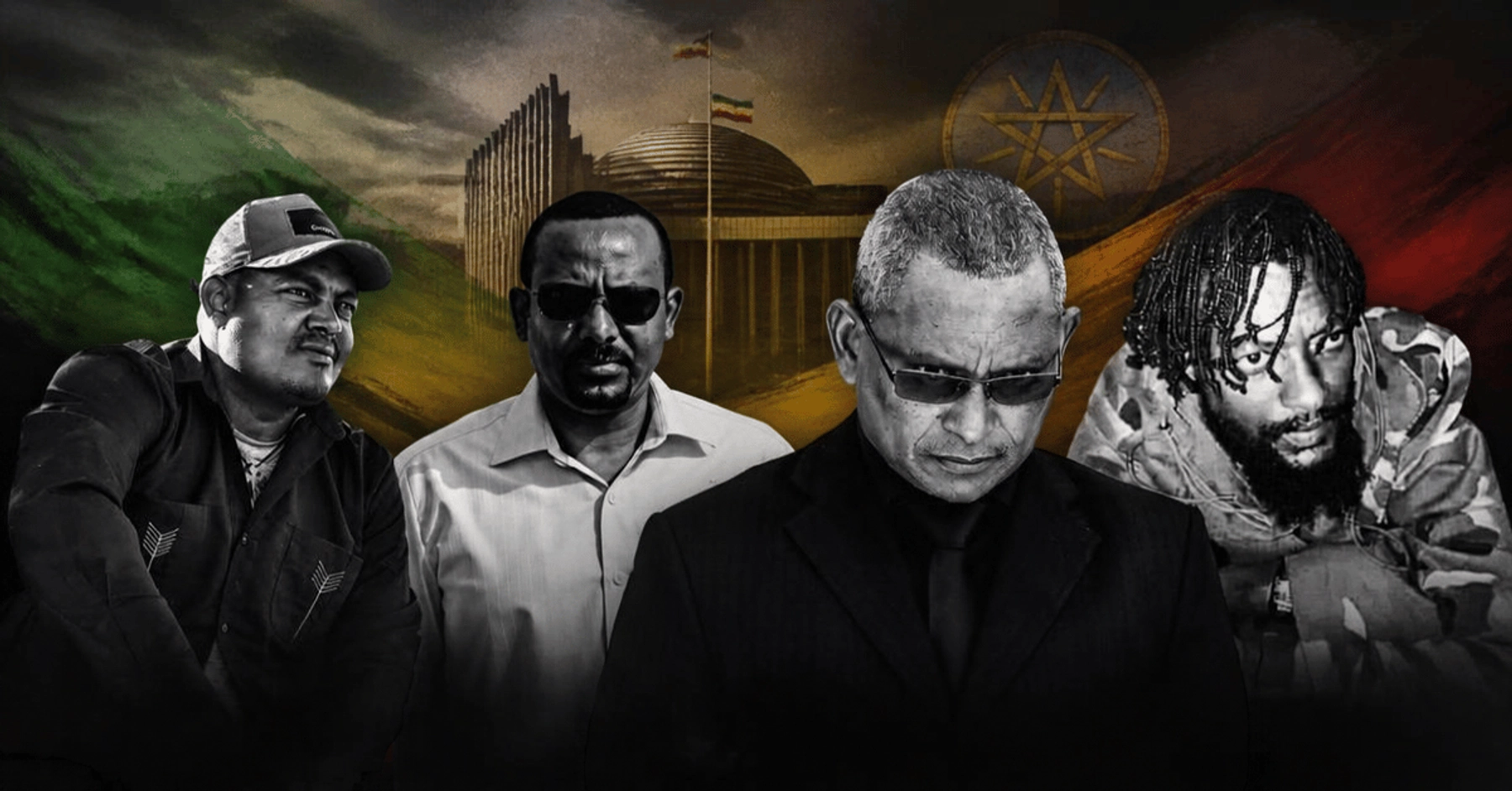
Ethiopia’s renewed war is being fought in the name of survival, but its protagonists have different ideas about what must survive. On September 20, seven armed groups announced the Alliance for Survival, a coalition seeking to remove Prime Minister Abiy Ahmed. Three days later, fighting involving federal and Tigrayan forces spread across Tigray and neighboring regions. Former enemies have united against Abiy without publicly resolving their competing visions of Ethiopia.
The struggle is over the state itself: who can command an army, govern disputed land, demand obedience and decide the terms on which communities belong to the country. Replacing Abiy would leave those claims unresolved. A prolonged war could push Ethiopia toward a more coercive central order, a renegotiated federation or deeper fragmentation. If Eritrea is drawn further in, the outcome could also reshape relations between states across the Horn of Africa.
For each belligerent, armed strength offers insurance against its rivals. The more each relies on that insurance, the harder it becomes to build an authority they can share. Pretoria’s collapse shows why a ceasefire needs political guarantees that remain binding as the balance of power changes.
The immediate task is to pursue ceasefires alongside a political process broader than another bargain between Addis Ababa and one Tigrayan leadership. The conflicts in Tigray, Amhara and Oromia are too interconnected for each settlement to ignore the others. Local ceasefires and humanitarian arrangements should proceed wherever possible, with channels linking them to negotiations on federal authority, regional self-government, disputed territory and security. Quiet mediation can prepare those talks without requiring public concessions before the terms of a possible bargain are known.
Why did Ethiopia relapse into war?
The November 2022 agreement stopped the northern war and saved lives. It provided for political dialogue, transitional justice, restored services and monitoring under African Union leadership. Those commitments never became durable assurances that concessions would be reciprocated. Disarmament could look like exposure to a stronger adversary; retained armed forces could look like preparation for renewed rebellion. The agreement needed to make compliance safer than keeping the means to fight. It failed to sustain that confidence.
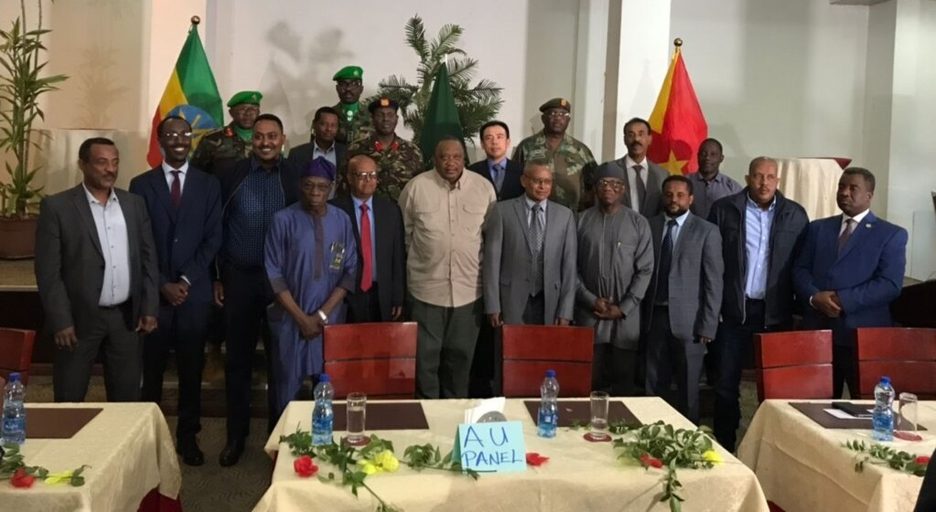
Nor did Pretoria produce an authority within Tigray that could reliably carry out its commitments. The interim administration, the Tigray People’s Liberation Front (TPLF) and military leaders became competing centers of power. In May, the TPLF revived the prewar regional council and installed its chairman as president, challenging the interim administration. The agreement depended on cooperation among authorities that increasingly contested one another’s right to govern. A signature offered no assurance of control over the institutions expected to implement it.
The sovereignty dispute has since become stark. A mobilization proclamation issued in June asserted sweeping powers to compel military service and punish dissent. A regional leadership was claiming the right to mobilize a population for war while resisting the authority of the internationally recognized government. This is a claim to the powers of a state, even without recognition as an independent one. A dispute of that kind cannot be resolved simply by redistributing ministerial posts in Addis Ababa.
Foreign governments deal with Ethiopia’s federal authorities as their sovereign counterpart. Yet international recognition, control on the ground and popular consent can point to different authorities. Recognition cannot establish consent to federal rule, just as an armed movement’s territorial control cannot establish its right to speak for everyone living there. Diplomacy must secure commitments from those who can command forces while giving the people affected a say in what those commitments authorize.
The federal government bears particular responsibility for the failure to make peace credible. It controls national institutions and resources that its opponents do not. Restoring services and representation, protecting civilians and enabling displaced people to return cannot be left to communities that lack the power to secure those conditions. In April, Human Rights Watch documented continuing persecution in Western Tigray, including arbitrary detention and discriminatory restrictions on movement, employment and services. People expelled during the war remained unable to return safely. For them, the promised peace had never restored the essentials of ordinary life.
Those grievances give the language of survival real force. They do not make the survival of a population identical to the survival of its ruling party. In July, Human Rights Watch reported abductions and forced recruitment by Tigrayan authorities, including of children as young as 15; a TPLF spokesperson denied forced recruitment. Families trying to keep their children out of another war are also making a claim to survival. Their claim cannot be dismissed because leaders believe the region’s future depends on fighting.
This distinction changes how the opposition alliance should be judged. Its principal members include the TPLF, the Amhara Fano National Movement and the Oromo Liberation Army. National self-determination, including the possibility of separation, and an encompassing Ethiopian political identity can lead to very different demands on a transitional government. The test is whether allies will accept limits on the power they hope to acquire together. A promise to discuss everything after victory postpones that test until the common enemy no longer holds them together.
Western Tigray and Raya make postponement especially dangerous. Tigrayan and Amhara claims to those territories do not disappear because their armed organizations cooperate. Control acquired during the campaign would shape the terms of any later negotiation. Deferring a dispute can therefore let force decide it in advance. Protecting current residents and enabling safe, voluntary return are essential to a legitimate outcome: expulsions must not determine who gets to participate in deciding the territory’s future.
These disagreements could affect the fighting long before a transition. A common military command must allocate supplies and decide whose forces bear the heaviest losses. Its cohesion will be tested when commanders must obey costly orders or restrain their fighters for the benefit of an ally. The relevant evidence will be how those decisions are implemented. An announced command structure cannot, by itself, establish that former enemies will accept its authority. Military cooperation remains contingent on bargains that battlefield losses or gains can undo.
Accountability presents a further test. Survivors of atrocities have claims that remain valid when yesterday’s adversaries become today’s partners. Leaders may find accommodation expedient; they cannot legitimately exchange their constituents’ demands for justice for military assistance. A credible transition would have to permit independent investigation of allies as well as enemies. An alliance that requires silence about the previous war would carry its unresolved violence into the next political order, making impunity part of the price of admission.
One defense of renewed military action is that force may succeed where appeals and diplomatic pressure have failed by compelling the parties back to the negotiating table. Yet this argument contains its own trap. As rebels advance, a threatened government may become more willing to negotiate just as the advancing coalition becomes less willing to compromise. If the government reverses those gains, it may decide that concessions are unnecessary. Pressure intended to open talks can repeatedly close the opportunity for them. Waiting for exhaustion is especially dangerous when leaders can shift the costs onto civilians or replenish their forces through foreign support.
Waiting for exhaustion assumes that those deciding to fight bear costs sufficient to persuade them to stop. Leaders able to shift those costs onto civilians or replenish their forces through outside support may tolerate devastation without changing course. Negotiating channels must therefore remain open while the belligerents still believe they can win. Humanitarian access cannot depend on their eventual willingness to reach a comprehensive settlement.
The Eritrea Factor
Eritrea sharpens that danger. Its army fought alongside Ethiopian federal forces against Tigrayan forces in the previous war. Relations between Addis Ababa and Asmara have since deteriorated. Ethiopia now accuses Eritrea of backing members of the opposition alliance; Eritrea denies the allegations. The extent of Eritrea’s operational involvement remains uncertain. But a foreign patron can want Ethiopia’s government weakened without wanting its challengers to build a strong successor.

If Asmara considers a stronger, hostile Ethiopia the greater threat, keeping Addis Ababa occupied at home could serve its interests while exposing Ethiopians to a longer war. Ethiopian factions would be useful for constraining the federal government; their ambition to reconstruct and govern the country could eventually put them at odds with their patron. Shared military interests do not guarantee a shared peace: interests that converge in war can diverge sharply over the terms on which that war ends.
The danger runs in the other direction too. Ethiopia’s pursuit of access to the Red Sea, particularly through the Eritrean port of Assab, has intensified Eritrean fears. Addis Ababa could treat perceived support for insurgents as a reason to widen the conflict across the border. A war justified as defending Ethiopian sovereignty could then become entangled with demands over ports and Eritrea’s political future. Such escalation is a risk, not an inevitability. Sudan’s war and wider competition around the Red Sea make containing it more urgent.
The possible outcomes extend beyond the survival of Abiy’s government. An opposition breakthrough would bring deferred disputes over Ethiopia’s union into immediate contention. A federal victory could entrench the belief that central authority can be secured through coercion. A prolonged stalemate could consolidate separate armed authorities and deepen dependence on foreign patrons. Ethiopia need not formally break apart for a shared state to become harder to rebuild. Military outcomes would shape the choices available to its people without necessarily securing their consent.
International diplomacy must address the incentives to continue fighting and the risks of stopping. Appeals to “the international community” obscure governments with different priorities and degrees of influence. The United States and European Union can support negotiations; the African Union has a distinct responsibility because Pretoria assigned it a formal monitoring role. Monitoring needs access to contested areas, public findings and agreed responses to violations. Documenting a breach without consequences can teach parties that commitments are optional.
Enforcement matters as much as the negotiating format. Pretoria gave the African Union a formal monitoring role; meaningful monitoring requires access, public findings and agreed responses to violations. Governments providing military assistance or diplomatic backing should condition that support on verified compliance with agreements; humanitarian aid must remain unconditional. Ethiopia’s need for reliable maritime access also should be negotiated through arrangements that respect its neighbors’ sovereignty. Addressing that concern could reduce one incentive for outside actors to sustain Ethiopia’s internal conflicts.
Within Ethiopia, implementation must reach below the level of party leaders. Commanders must demonstrate that they can carry out agreed security measures and be answerable when they do not. Disarmament should advance as civilian protection and accountable command become verifiable on the ground. Civilian opposition groups, displaced people and communities resisting renewed mobilization need a voice in judging those conditions. An interim administration also needs limits on its own powers and a defined route to representative government. Otherwise, negotiations can turn military control into permanent political entitlement, leaving citizens to endorse arrangements made without them.
None of this requires settling every constitutional question before stopping the war or allowing political change. It requires agreement on how those questions can be decided without coercion. Essential services must continue; residents and displaced people must retain their rights; accountability must survive changes of alliance. These are the conditions under which competing visions of Ethiopia can be debated rather than imposed.
The terms of political participation matter just as much. Civilian opposition groups, displaced communities and those resisting renewed mobilization must retain the freedom to organize, dissent and challenge both federal and regional authorities. Abiy’s departure could alter Ethiopia’s balance of power, but it would not answer the more fundamental questions of who may exercise authority, under what constraints, and through what mechanisms citizens can withhold or withdraw consent. Those questions must remain open to political contestation. Ethiopia’s future cannot be settled solely by armed actors. Its people must have a meaningful role in determining the terms on which they live together. Territorial conquest, forced displacement and bargains with foreign patrons can foreclose that choice before negotiations even begin. By the time the belligerents sit down to negotiate the state, the war may already have remade it.
We need your support
We trust you found something of value in this article. If so, we kindly ask you to consider helping Curate Oromia continue its work.
If you believe in the importance of independent voices and honest reporting, we invite you to support our efforts through our GoFundMe campaign.
Every contribution, however small, goes directly to our writers and the expansion of our reach.
Thank you for your support.