Conceptualizing the Images of Girls in Guji Oromo Proverbs
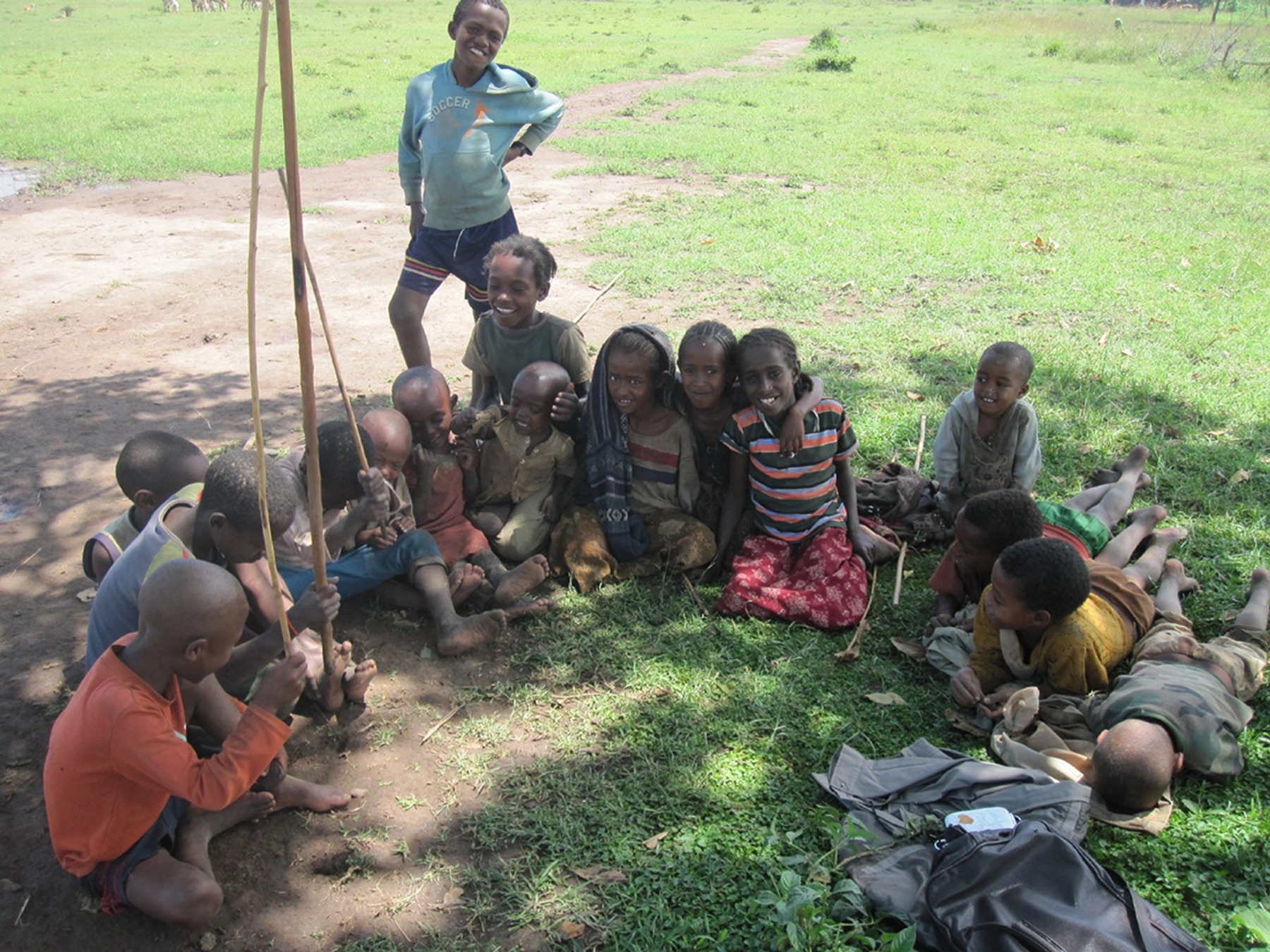
Guji children performing storytelling in a cattle herding field. Photo: Tadesse Jaleta Jirata
Among the Guji Oromo of southern Ethiopia, proverbs are not merely decorative speech but deeply embedded cultural tools that communicate social norms, moral judgments, and collective memory. These short, evocative sayings distill generations of experience into concise expressions used to advise, warn, praise, criticize, and educate in Afaan Oromoo. While they are often celebrated as repositories of communal wisdom, proverbs also carry powerful images that shape how different members of society, particularly girls, are perceived and treated. This article examines how Guji Oromo proverbs conceptualize girls and explores how these conceptual images influence their self-understanding, social participation, and status within the community.
In Guji society, some proverbs portray girls positively, especially in relation to motherhood and emotional bonds. For example, “Haati ifii dhiphinnaafi baldhina intalaa garaa keessatti beekti” (“One’s own mother understands, from the heart, what her daughter cannot express”) emphasizes maternal empathy and intimate knowledge of daughters’ emotions. Similarly, “Karaa haati baate intalti hin wollaaltu” (“A daughter does not lose the path taken by her mother”) highlights moral guidance and continuity across generations. The proverb “Duutee kaatee haati intalaa, du’aa baate” (“A mother of a daughter is saved after her daughter grows up”) reflects the expectation that daughters will ultimately support their mothers after the challenges of childrearing.
Although these proverbs celebrate motherhood and filial care, they also subtly confine girls to domestic and caregiving roles. Responsibilities such as childbearing, nurturing, and household labor are implicitly assigned to women and girls, reinforcing the notion that a girl’s primary social value lies within the home. Thus, even positive representations contribute to the normalization of gendered divisions of labor and limit broader social possibilities for girls.
Conversely, many Guji Oromo proverbs depict girls as weak, dependent, and incapable of autonomous decision-making. The proverb “Intalti ofiin bultuun fincaan harkaan dhiqatti” (“If a girl governs herself, she washes her hands with urine”) suggests that girls cannot manage independence responsibly. Likewise, “Dubartiin qabeenya hin horattu; ishiinuu qabeenya” (“A woman does not accumulate wealth; she herself is wealth”) positions women not as producers or property owners but as objects transferred through marriage.
Dependence is further reinforced in proverbs that link women’s stability and value to sons. “Haati ilma hinqabne daandii hinqabdu” (“A mother without a son has no destination”) reflects the belief that a woman’s security and future depend on having a male child, marginalizing daughters even when they are capable.
The intellectual capacity and decision-making skills of girls are also questioned. “Beekkumsa intala durbaa eegeen badii” (“The knowledge of a girl is useless in the end”) frames girls’ education as ultimately meaningless, discouraging investment in their schooling. Similarly, “Ana godaansa badee, intalti tiyya heeruma bade” (“When I chose the wrong place to settle, my daughter lost the right marriage”) portrays women’s decisions as prone to failure, reinforcing stereotypes of poor judgment.
Other proverbs depict girls as fearful or careless. “Tanuma naa hobbaasi jette tan dhala sodaatte” (“Just help me with this one, said the woman who feared childbirth”) characterizes women as cowardly at critical moments. “Deebi’ii qammansi jette intalti qodaa arraabdee aannan itti naqxe” (“She said ‘hug me,’ while pouring milk into a dirty container”) portrays girls as careless and inconsistent—traits unfairly generalized to all women.
Marriage-related proverbs further reveal how girls are evaluated based on family background rather than individual merit. Sayings such as “Haadha laalii intala fuudhi” (“Look at the mother before marrying the daughter”) and “Farda fincaan bitan, intala fincaan fuudhan” (“Just as one examines a horse before buying it, one examines a girl’s family before marriage”) reduce girls to reflections of their lineage, emphasizing collective judgment over personal character.
Some proverbs express extreme distrust toward girls’ morality. “Intalti garaa laafte obboleessaaf ulfoofti” (“A soft-hearted girl may even conceive by her brother”) suggests that girls lack moral boundaries. Although elders often claim such sayings serve as warnings, their repeated use normalizes suspicion toward girls’ behavior. Education is similarly discouraged in “Intalti baratteefi simbiri bararte eessaayyuu hin geettu” (“An educated girl and a bird that flies low reach nowhere”), which equates schooling with futility.
Social control over girls’ sexuality and speech is evident in “Eebada elo tiyya jette tan manatti garachofte” (“Sorry for my fault, said the girl who became pregnant while in her parents’ house”), where shame is disproportionately assigned to girls. Similarly, “Heeruma dharraanee, heerumnee rarraane” (“We wanted to get married; we got married and suffered”) reflects regret attributed to women’s marital aspirations. Girls who openly express affection, as in “Ani ifiif hin jennee… jette intalti” (“I am not speaking for myself… said the girl”), are also stigmatized.
Internalized misogyny is vividly illustrated in “Mucaa deenna malee mucaa hin geennu” (“We will give birth to a child, but a son is better than us”), where women themselves reproduce male preference. The most restrictive proverb—“Intalti durbaa (Intalti namaa) bakka sadi jirti, yokiin mana haadhaafi abbaa jirti, mana dhirsaa jirti yokiin ammo duutee boolla jirti” (“A girl should be in her parents’ house, her husband’s house, or in the grave”)—confines girls’ existence to private spaces and symbolically excludes them from public life.
Taken together, these proverbs construct a social reality in which girls are valued primarily as daughters, wives, and mothers, while simultaneously portrayed as dependent, unreliable, and inferior. Their repeated transmission across generations reinforces negative self-images among girls and restricts their participation in social, political, and economic spheres. Nevertheless, there is growing awareness within the community of the harmful effects of such sayings. Elders, officials, and girls themselves increasingly recognize the need to discourage proverbs that demean girls while retaining and reinterpreting those that promote care, responsibility, and mutual respect.
Observations from Guji Oromo rituals, such as the Jila Gadaa ceremony, reveal that girls continue to participate actively in cultural life—wearing traditional dress, performing songs, and contributing symbolically to communal identity. These cultural spaces offer opportunities to challenge restrictive narratives and reaffirm girls’ dignity.
Overall, the intergenerational transmission of proverbs has played a pivotal role in sustaining negative conceptual images of girls, shaping both social attitudes and self-perceptions. At the same time, oral tradition remains a living and adaptable resource. By critically engaging with proverbs, retaining those that affirm care, cooperation, and responsibility while abandoning those that naturalize inferiority, Guji society can transform its oral heritage into a tool for gender equity.
We need your support
We trust you found something of value in this article. If so, we kindly ask you to consider helping Curate Oromia continue its work.
If you believe in the importance of independent voices and honest reporting, we invite you to support our efforts through our GoFundMe campaign.
Every contribution, however small, goes directly to our writers and the expansion of our reach.
Thank you for your support.